

Introduction
When we evaluate a build partner, the conversation often starts with technology stacks, delivery timelines, and cost structures. Those factors are essential, but they tell only part of the story. Over the past several engagements, we have seen projects falter not because of code quality, but because the two organizations never truly clicked on a cultural level. In this post we explore cultural alignment, why it matters for sustainable partnerships, and how you can make it a concrete part of your selection process.
Defining Cultural Alignment
Cultural alignment is the degree to which the values, communication styles, decision‑making habits, and risk appetites of two organizations intersect. It goes beyond a superficial “we like each other” feeling; it is about shared expectations around transparency, ownership, and how success is measured. For a build partner, cultural alignment means that the external team behaves as an extension of your own product org, adopting the same cadence, escalation paths, and quality mindset you expect from an internal squad.
Assessing Cultural Alignment Early
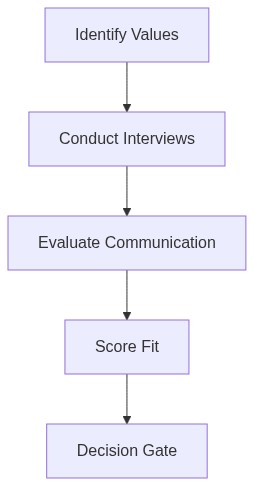
The sooner you surface cultural mismatches, the cheaper it is to address them. We recommend embedding a cultural assessment into the same RFP timeline you use for technical evaluation. Begin with a short questionnaire that captures core values (e.g., customer focus, data‑driven decision making) and preferred ways of working (e.g., agile ceremonies, documentation standards). Follow that with structured interviews that pit your senior engineers, product managers, and CTO against their counterparts on the vendor side. The goal is to observe interaction patterns, not just collect answers.
Use Case Studies
- FinTech Platform – A Misaligned Pace: A fintech startup partnered with a vendor whose culture prized rapid prototyping over rigorous testing. Early releases shipped quickly, but defect rates spiked, forcing the startup to pause development and renegotiate quality gates. The cultural mismatch cost the project three months and eroded trust.
- Healthcare SaaS – Aligned Transparency: A healthcare SaaS provider chose a partner that emphasized open communication and shared dashboards. Both teams held joint sprint reviews, and issues were surfaced in real time. The project stayed on schedule, and the client reported higher satisfaction because the partner’s culture reinforced the client’s own emphasis on compliance and auditability.
These examples illustrate that cultural alignment directly influences risk exposure, velocity, and ultimately the business value delivered.
Establishing Measurable Metrics
To move cultural alignment from a vague notion to an actionable criterion, we recommend tracking a handful of leading indicators throughout the engagement:
- Communication Latency: Average time to respond to Slack or email queries.
- Decision Turn‑around: Time taken to approve design changes or release decisions.
- Alignment Scorecard: A quarterly survey where both sides rate statements such as “Our partner respects our product roadmap priorities.”
- Escalation Frequency: Number of issues that require senior‑level intervention.
Collecting these data points provides a factual baseline that can be compared across vendors and over time.
Linking Alignment to Project Outcomes
When cultural alignment is strong, you typically see three measurable outcomes:
- Predictable Delivery – Teams that share cadence and risk tolerance can plan more accurately, reducing schedule variance.
- Higher Quality – Shared quality expectations lead to fewer post‑release defects and lower rework costs.
- Strategic Flexibility – Aligned partners are more willing to adapt to shifting market demands because they view changes through the same lens of customer value.
Conversely, a misalignment often manifests as hidden rework, missed milestones, and strained relationships that can jeopardize future collaborations.
Embedding Alignment into Ongoing Governance
Cultural alignment is not a one‑off checkbox; it requires continuous reinforcement. Establish a joint governance board that meets monthly to review the metrics above, celebrate cultural wins, and surface friction points early. Encourage cross‑team retrospectives that focus on collaboration, not just technical deliverables. Over time, this governance loop turns cultural alignment into a living contract rather than a static selection criterion.
Conclusion
Technical competence remains a prerequisite for any build partner, but without cultural alignment the partnership is vulnerable to miscommunication, hidden risk, and ultimately, project failure. By defining what alignment means for your organization, assessing it early with structured interviews and questionnaires, grounding it in real‑world case studies, and tracking concrete metrics, you create a repeatable framework that elevates both the selection process and the long‑term health of the partnership. When cultural alignment is baked into every stage—from RFP to governance—you set the stage for sustainable success.